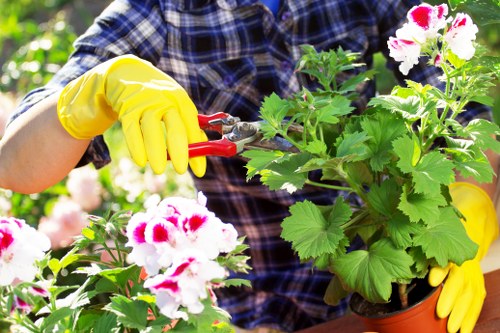
Recycling and Sustainability for Gardeners Golders Green
Gardeners Golders Green is committed to creating an eco-friendly waste disposal area and a resilient, sustainable rubbish gardening area that supports local green spaces and reduces landfill. Our approach blends practical on-site sorting, neighbourhood partnership working and measurable targets so that Golders Green gardeners can see real progress. This page explains the key elements of our plan — from recycling percentage targets to low-carbon logistics — and how it complements the borough’s wider waste separation strategy.Our core objective is clear: to increase reuse, recycling and composting across gardening projects while shrinking the carbon footprint of waste handling. We have set a local recycling percentage target of 70% by 2030, focusing on reducing single-use materials and diverting organic green waste into community compost systems. That target aligns with an ambitious, practical route-map rather than abstract goals: routine reporting, regular audits, and incremental improvements in collections and sorting infrastructure will track progress.
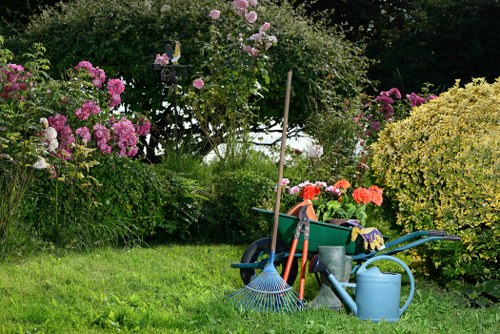 The plan also reflects the wider London Borough approach to waste separation used in nearby councils. We support separated streams for food and kitchen scraps, glass and metals, paper and card, and mixed dry recycling, while promoting separate collection for green garden waste where borough services allow. Practical recycling activities for the neighbourhood include kerbside segregation, local drop-off points for hard-to-recycle items, and collaborative arrangements with neighbourhood councils to increase capture rates of compostable garden matter.
Local Transfer Stations and Eco-Friendly Disposal Areas
To move material efficiently and responsibly we use nearby transfer stations and sorting centres that serve North London and the Borough of Barnet. These local transfer hubs enable bulked-up loads to be processed, reducing double-handling and cutting vehicle miles. Where possible we prioritise transfer stations with on-site facilities for material recovery, composting and reuse; this ensures that green waste becomes high-quality compost or biomass rather than being diverted to landfill.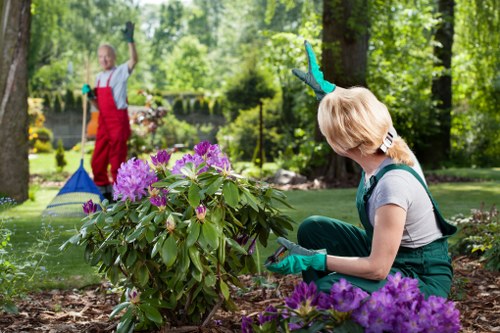
Partnerships with Charities and Community Reuse
Partnerships are at the heart of our scheme. We collaborate with local charities, community groups and social enterprises to give unwanted items a second life: soil and compost exchanges, reclaimed timber for raised beds, and furniture or tool donations to community gardens. Typical partnership activities include:- Redistribution of usable garden tools and planters to local charities and community gardens
- Donation pathways for excess topsoil and clean soil improvers to community allotments
- Collections for bulky green waste that can be turned into community compost or biomass feedstock
These relationships reduce waste handling costs, increase social value, and help retain materials in the local circular economy. Gardeners of Golders Green benefit when materials are reused locally rather than transported long distances.
To achieve low-emission haulage we maintain a fleet of low-carbon vans and shared electric vehicles for short-distance collections. Where electric vans are not yet practical for larger loads, we use the cleanest available alternatives and route-optimised scheduling to minimise mileage. Our logistics policy emphasises consolidation of loads to transfer stations, reduced idling times, and the use of vehicle charging infrastructure within the area. This approach helps reduce the embodied emissions of waste transport for Golders Green gardening waste while supporting cleaner streets.
On-site sustainable rubbish gardening areas are designed to make separation simple and obvious. Clear signage, separate bays for recyclables, mixed dry recycling, and a dedicated green-waste bay reduce contamination. We also provide bags and containers that are compatible with borough collection schemes so that material can easily enter formal recycling streams. The goal is to enable volunteers and contractors to do the right thing with minimal extra effort.
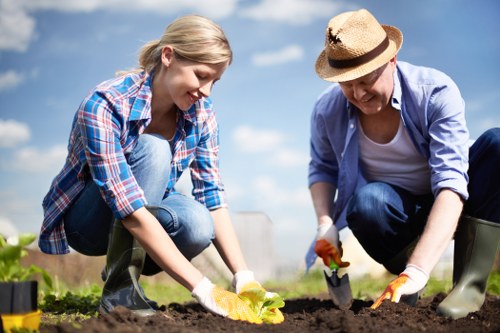 Monitoring, transparency and community engagement are essential. We publish quarterly recycling performance metrics, track contamination rates, and report progress toward our 70% recycling goal. In addition to metrics, our team runs awareness events with neighbours and local allotments to explain borough separation rules and the benefits of composting. By working with existing Barnet waste separation policies — such as separate food and glass collections — we ensure compliance and smooth handover into municipal systems.
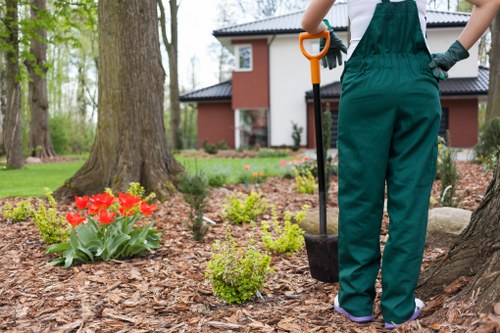 Implementation details prioritise practical, low-cost interventions that multiply impact. Examples include communal compost bays for green garden waste, recycled material storage racks to keep salvageable wood and plastics dry, and simple inspection regimes to reduce contamination. We emphasise training of staff and volunteers in segregation best practice and safe handling of bulky garden residues — all with the aim of retaining value in materials rather than manufacturing new inputs.
Metrics are reinforced by local policy alignment: we aim to work within the London Borough frameworks that encourage separate food, paper, glass and garden collections, and we coordinate with borough recycling calendars to make sure our collection days and transfer movements dovetail with municipal services. This produces efficiencies, improves capture rates and reduces overall greenhouse gas emissions associated with waste handling in the Golders Green area.
Gardeners in Golders Green, Gardeners Golders Green teams and community groups all have a role to play. By combining a clear recycling percentage target, local transfer station use, strong charity partnerships and a fleet of low-carbon vans, we can create a durable, sustainable rubbish gardening area that supports thriving community green spaces and a cleaner local environment for everyone.

